FIGURE 11.29 Grime’s plant strategies suggest that three habitat factors influence plant evolution and adaptation. These factors are: Competition, disturbance, and stress. Image Copyright: Michael Pidwirny.
Ecologists and biogeographers are always seeking simple theories to explain the various patterns observed in nature. One pattern that has always intrigued these scientists is that comparable environments are often occupied by species with similar adaptations. For example, if we compare the various deserts of the world, we find that the plants that live there generally have a set of adaptive strategies to survive drought and high temperatures. The explanation for this observation is quite simple. Because of natural selection, similar environmental conditions select for similar adaptations in species.
r- and K-Selected Species
In 1967, MacArthur and Wilson published the theory of island biogeography. This work mathematically modeled the dynamics associated with species colonization of islands. From this research came the idea that the level of environmental disturbance present in a habitat determines the types of species that occupy this place. At one extreme, some habitats experience frequent, random abiotic disturbances. These environmental fluctuations are severe enough to regularly cause high mortality rates. To survive in these harsh conditions, successful species generally have the following adaptations: Small body size, short lifespan, quick maturation, a reproductive effort that is delayed till the end of the organism’s life, production of many small offspring, and a large portion of the organism’s production of biomass is used to produce offspring. Organisms that show these characteristics are called r-selected species. An example of an r-selected species is the various annual and perennial plants found in grassland habitats (Figure 11.27). In these habitats, frequent drought and severe winters limit the kinds of species that can survive here. Flourishing species tend to be relatively small individuals that can grow and reproduce quickly, hopefully before the next disturbance. These species also allocate substantial resources to reproduction, producing many small, well-dispersed seeds that remain in the soil until favorable conditions trigger germination.
On the other end of the spectrum are stable or predictable habitats. In these habitats, optimal conditions for survival and growth are almost always present. Dominant species in this environment tend to have the following characteristics: Large body size, long lifespan, slow maturation, reproductive effort occurs over most of the organism’s life, only a few relatively large offspring are produced with each reproduction event, and most of the organism’s production of biomass goes to promoting its growth. Among animal species, parents care for their young for a significant period after birth. In plants, seeds store large amounts of food to give the seedling a strong start in life. Species that show these characteristics are known as K-selected species. The various types of trees found in tropical and temperate rainforests are examples of K-selected species (Figure 11.28). In these ecosystems, environmental conditions are highly favorable for growth, and disturbances are relatively rare.
Using this simple scheme, we can identify two broad strategies for survival. This scheme suggests that the adaptations found in species have evolved due to the evolutionary relationship between organisms and their environments. Yet, there are apparent exceptions to this theory for several reasons. Most habitats are not at the ends of the r- and K-selection continuum. As a result, species in these habitats will probably show intermediate adaptations. Second, nature is anything but simple, and evolution can allow for the development of other adaptations for surviving in r- or K-selected habitats. For instance, grasslands host many large grazing animals, which are definitely K-selected. Physiological and behavioral adaptations allow these species to survive in a strongly r-selective environment.
Grime’s Plant Strategies
Plant ecologist J.P. Grime has expanded the r- or K-selection theory a step further, specifically for land plants (Figure 11.29). The theory of r- or K-selection suggests that the intensity of habitat disturbance influences broad adaptive strategies that influence reproductive abilities, longevity, and size. Grime calls plants that exhibit adaptive strategies to overcome the effects of disturbanceruderal species. Ruderal plant species have an annual or short-lived perennial life history that enables them to exploit the rapidly changing environmental conditions of frequently disturbed habitats (Figure 11.30). Generally, they also have the capacity for high growth rates, with much of the biomass produced allocated to seed production. The production of many seeds per plant guarantees offspring germination in future disturbance-created habitat gaps.
In stable environments that lack frequent disturbance and where the nutrient resources for growth are plentiful,competitive speciesare prominent. General characteristics of competitive plants include a high growth rate and the potential to produce a tall, dense leaf canopy and a large root surface area (Figure 11.31).
Dominant plants adopt a stress-tolerant strategy in habitats with high stress and low disturbance. Often, growth instress-tolerant speciesis constrained by a shortage of water, light, heat, mineral nutrients, or a surplus of heat. Plants with the stress-tolerant strategy possess specific morphological and physiological adaptations that enable them to thrive in stressful habitats. These traits include an evergreen habit, long-lived tissues, tissues resistant to stress, organs that store nutrients or water for later use, and flowering time in response to specific environmental cues (Figure 11.32).
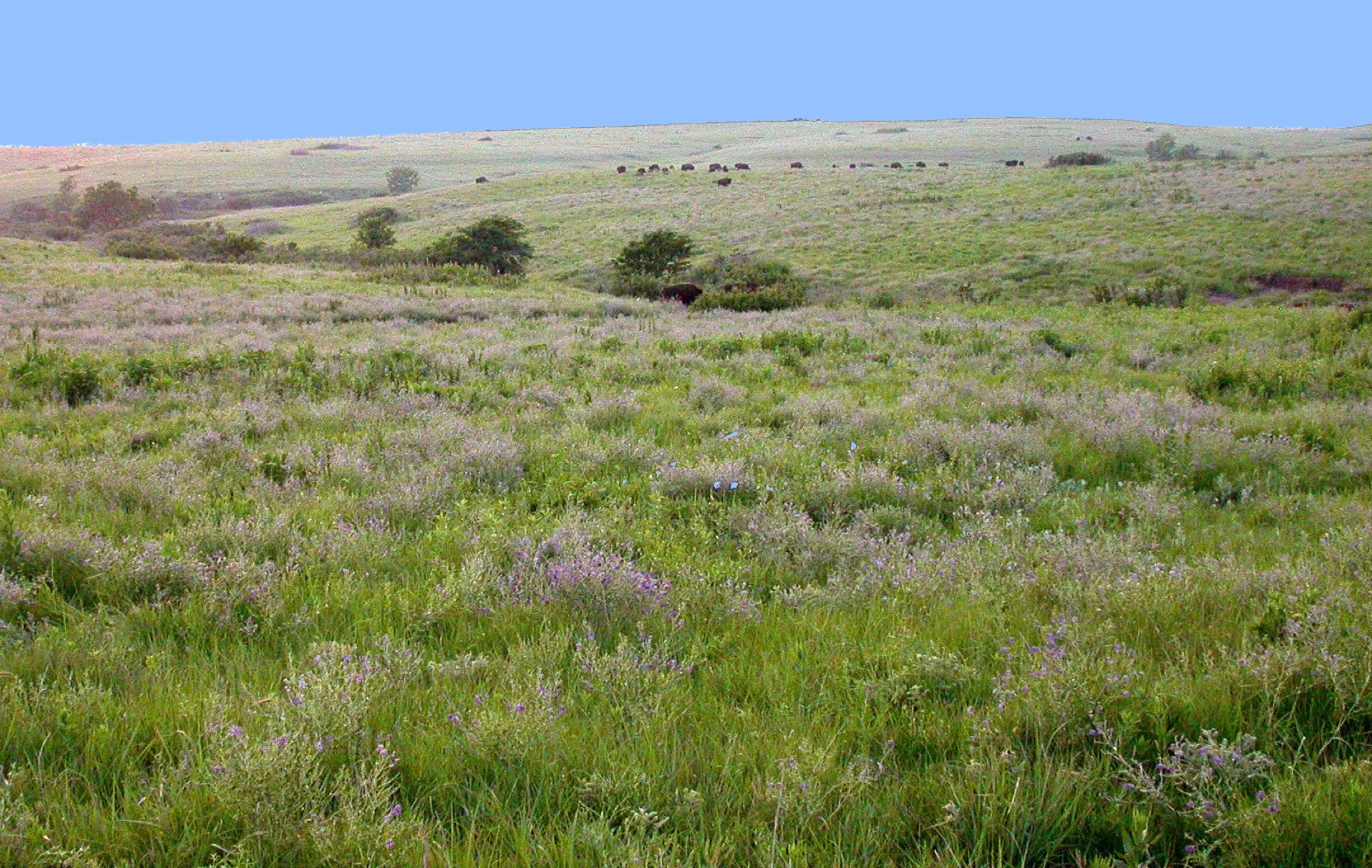
FIGURE 11.27 Annual and perennial plant species dominate grassland ecosystems. Some of the characteristics of these plants include small body size, short lifespan, rapid growth, late reproductive effort during the growth cycle, the production of many small, well-dispersed seeds, and a large portion of the organism’s photosynthetic resources being used for reproduction. Organisms with these characteristics are classified as r-selected species. Image Source: Wikimedia Commons, photo by Edwin Olson.
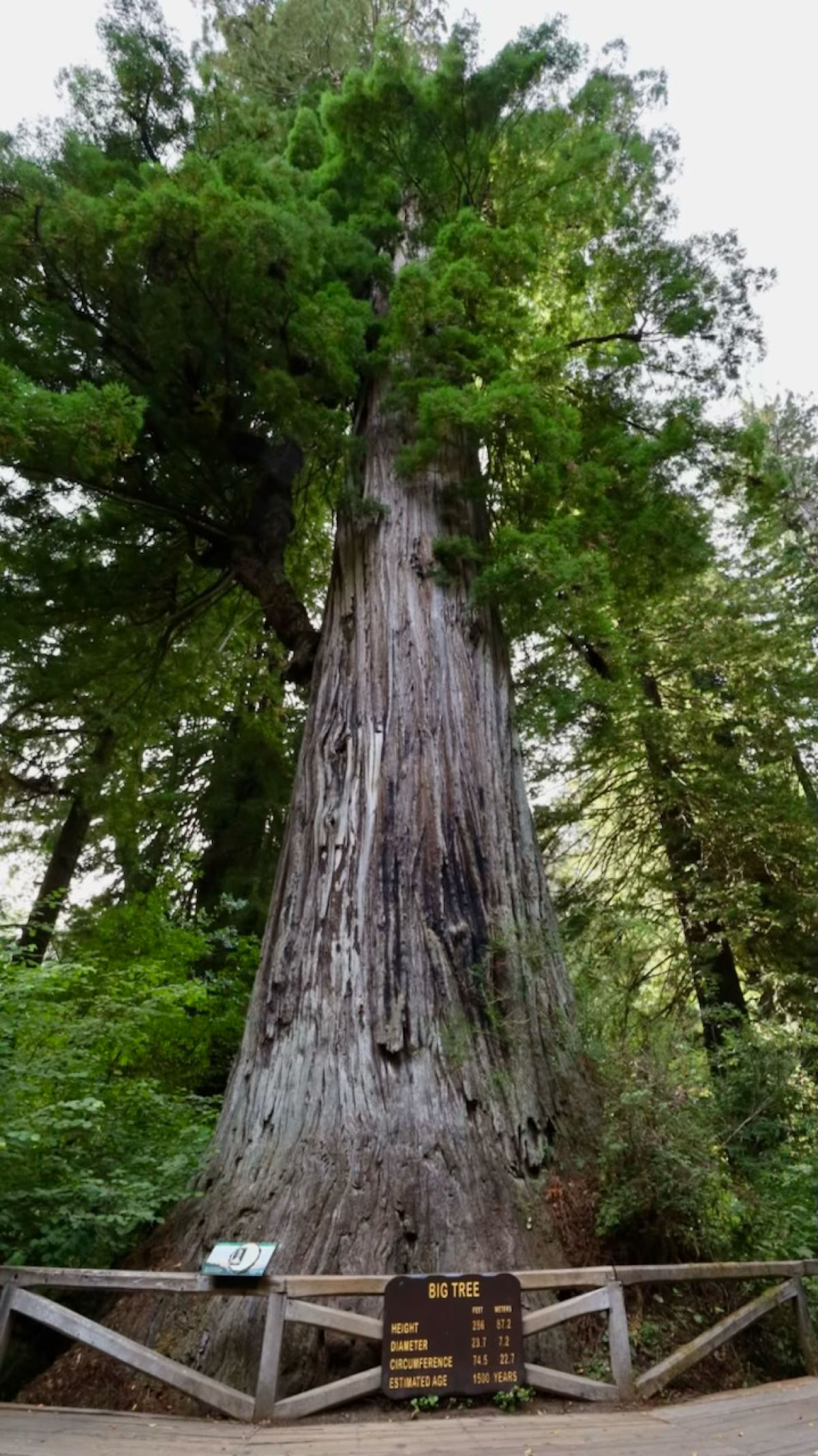
FIGURE 11.28 The Coast Redwoods (Sequoia sempervirens) of the northern California coast would be considered a K-selected species. In this picture, we see a Coast Redwood known as Big Tree. This tree is around 1500 years old and stands just over 87 meters tall. Redwoods are also the tallest organisms on our planet, with many individuals exceeding 100 meters (300 feet) in height. Image Copyright: Michael Pidwirny.
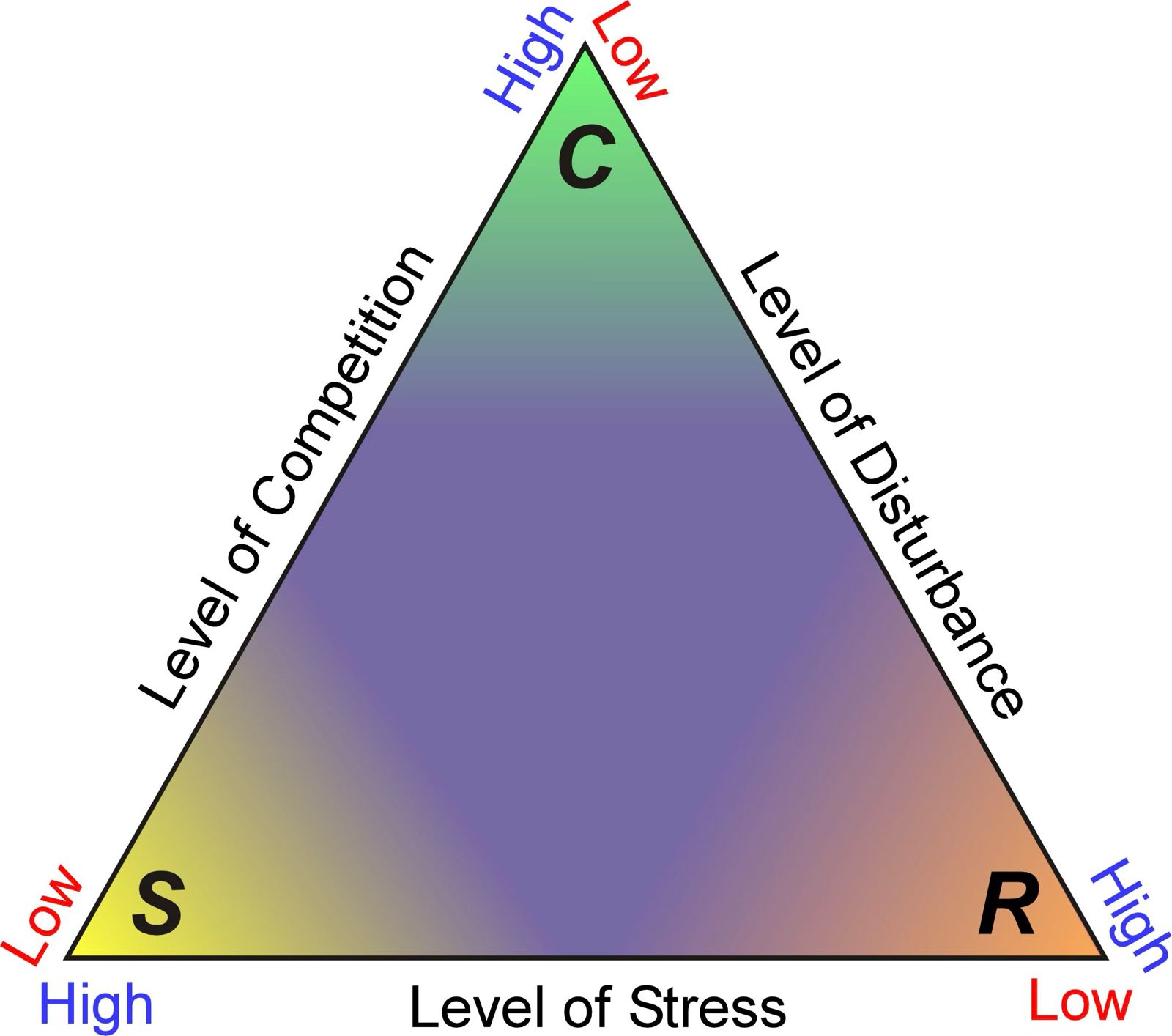
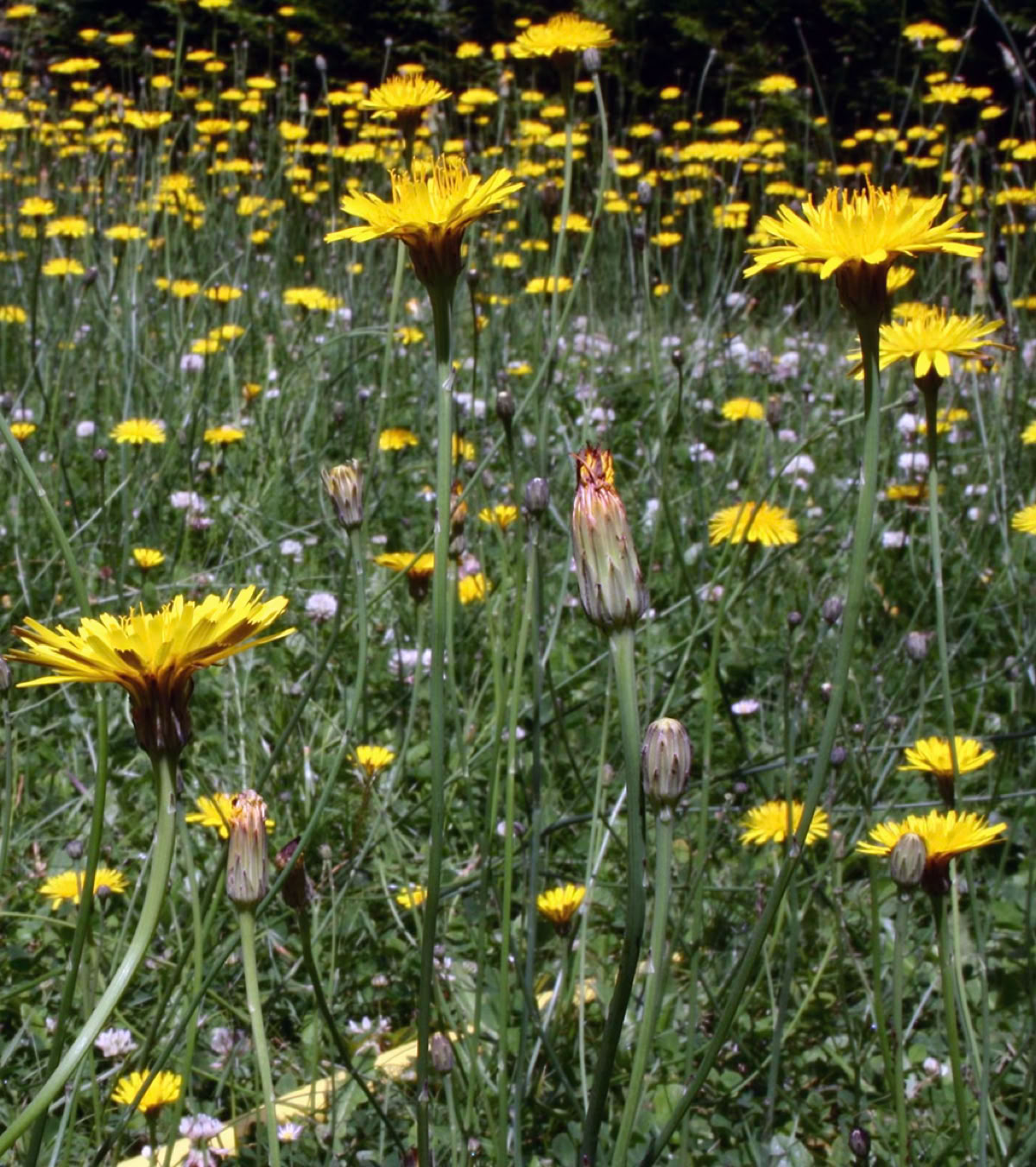
FIGURE 11.30 The eruption of Mount St. Helens in 1980 removed most of the vegetation found over a large area around the volcano. One of the first species to colonize this barren landscape was the False Dandelion (Hypochaeris radicata). This ruderal species produces many small wind-dispersed seeds that can quickly travel great distances to colonize newly disturbed habitats. Image Source: Wikimedia Commons, photo by Strobilomyces. This image is licensed under the Creative Commons Attribution-Share Alike 3.0 Unported license.
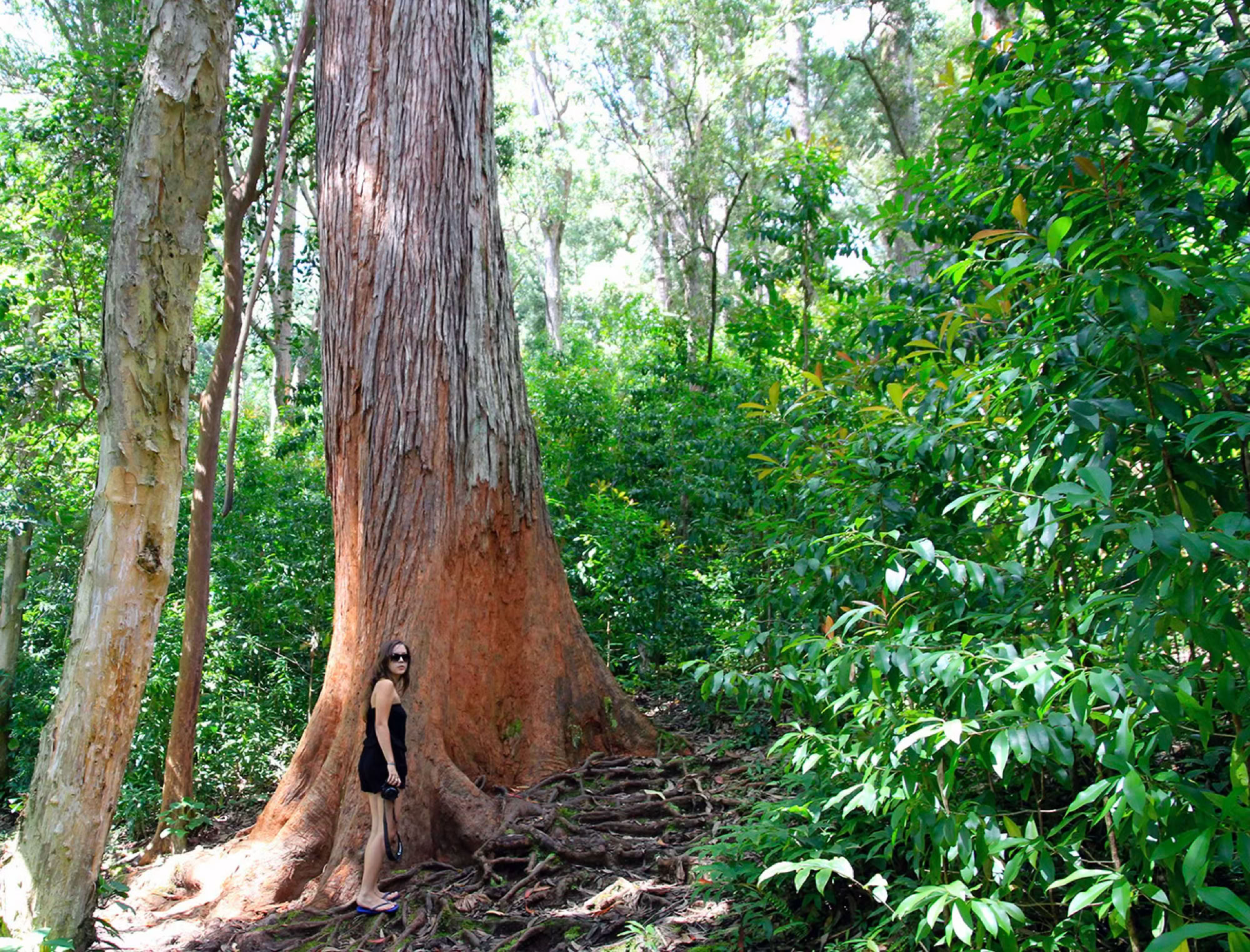
FIGURE 11.31 Many of the trees found in tropical rainforest ecosystems can be classified according to Grime’s plant strategies as competitive species. Competitive species have fast growth rates and allocate a high proportion of their biomass to building leaves to capture light and extensive root systems to absorb soil nutrients and water. Competitive species often produce stems that always keep foliage in full sunlight. Image Copyright: Michael Pidwirny.
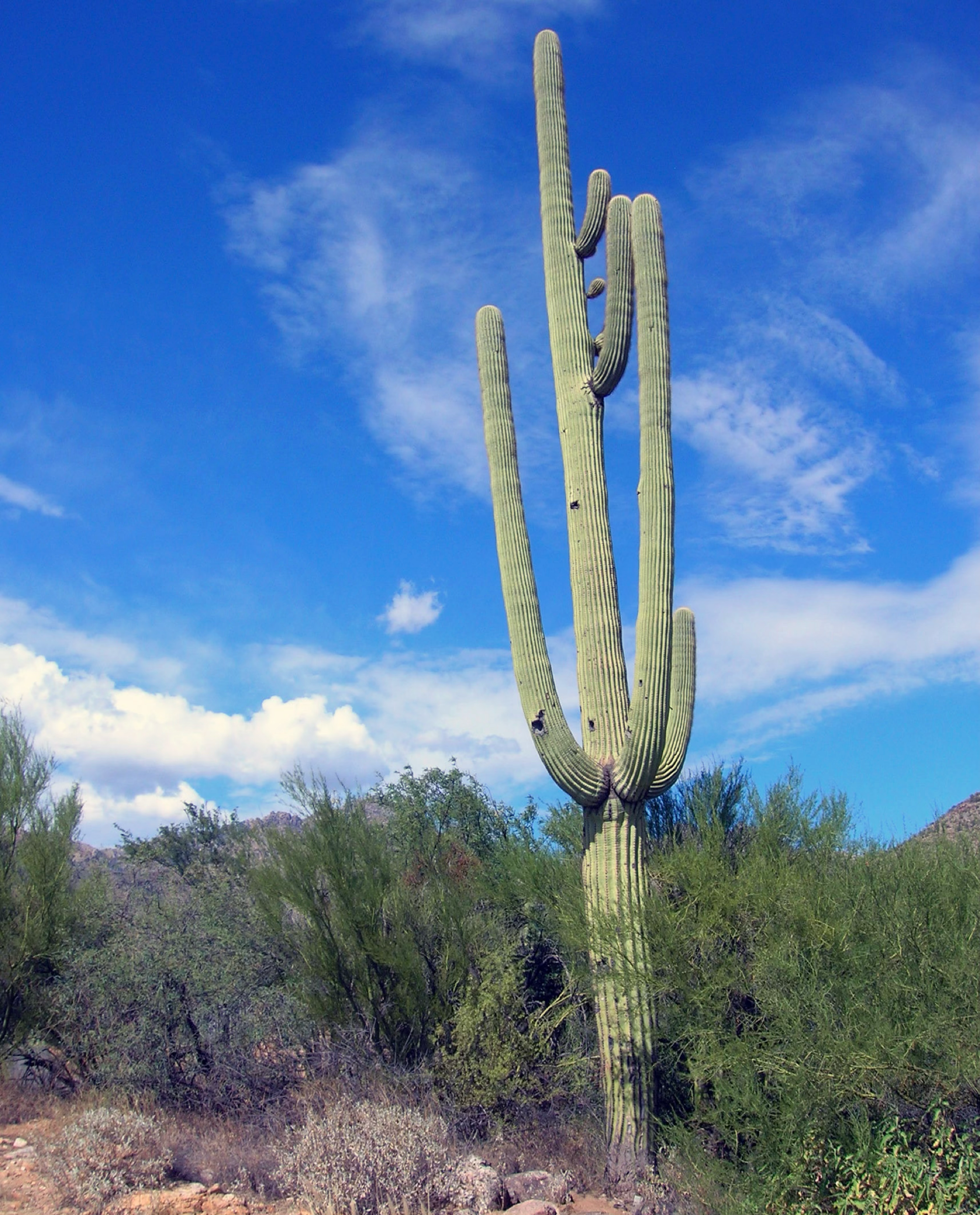
FIGURE 11.32 Many environmental factors can stress plants, including high temperatures, low temperatures, drought, waterlogging, and the presence of toxic chemicals in the soil. Most plants found in desert habitats have adaptations that enable them to survive in stressful environments where water is scarce and temperatures are high. For example, the Saguaro Cactus (Carnegiea gigantea) of the Sonoran Desert is one such species adapted to survive in the desert. This plant does not have leaves but a photosynthetic stem. This adaptation reduces the plant's surface area from which water can be lost to the atmosphere through evaporation and transpiration. The stems of this plant also serve as reservoirs storing water for later use. These stems are protected from thirsty predators by a surface covering of sharp spines. Image Source: Wikimedia Commons, photo by Grombo. This image is licensed under the Creative Commons Attribution-Share Alike 3.0 Unported license.